Anaesthesia & Critical Care

The Department You Don’t Choose — But One That Matters More Than You Think.

You’ll probably never book an appointment with an anaesthetist. You’ll never browse this department’s page wondering if you need one. But the moment you’re wheeled into an operating theatre, or the moment a loved one is admitted to the ICU — this department becomes the most important one in the hospital.

Anaesthesia & Critical Care is the invisible backbone of every surgical procedure and every intensive care admission at AvaMED. The team that puts you to sleep safely, keeps you stable during surgery, manages your pain after, and monitors every vital sign during your most vulnerable hours.
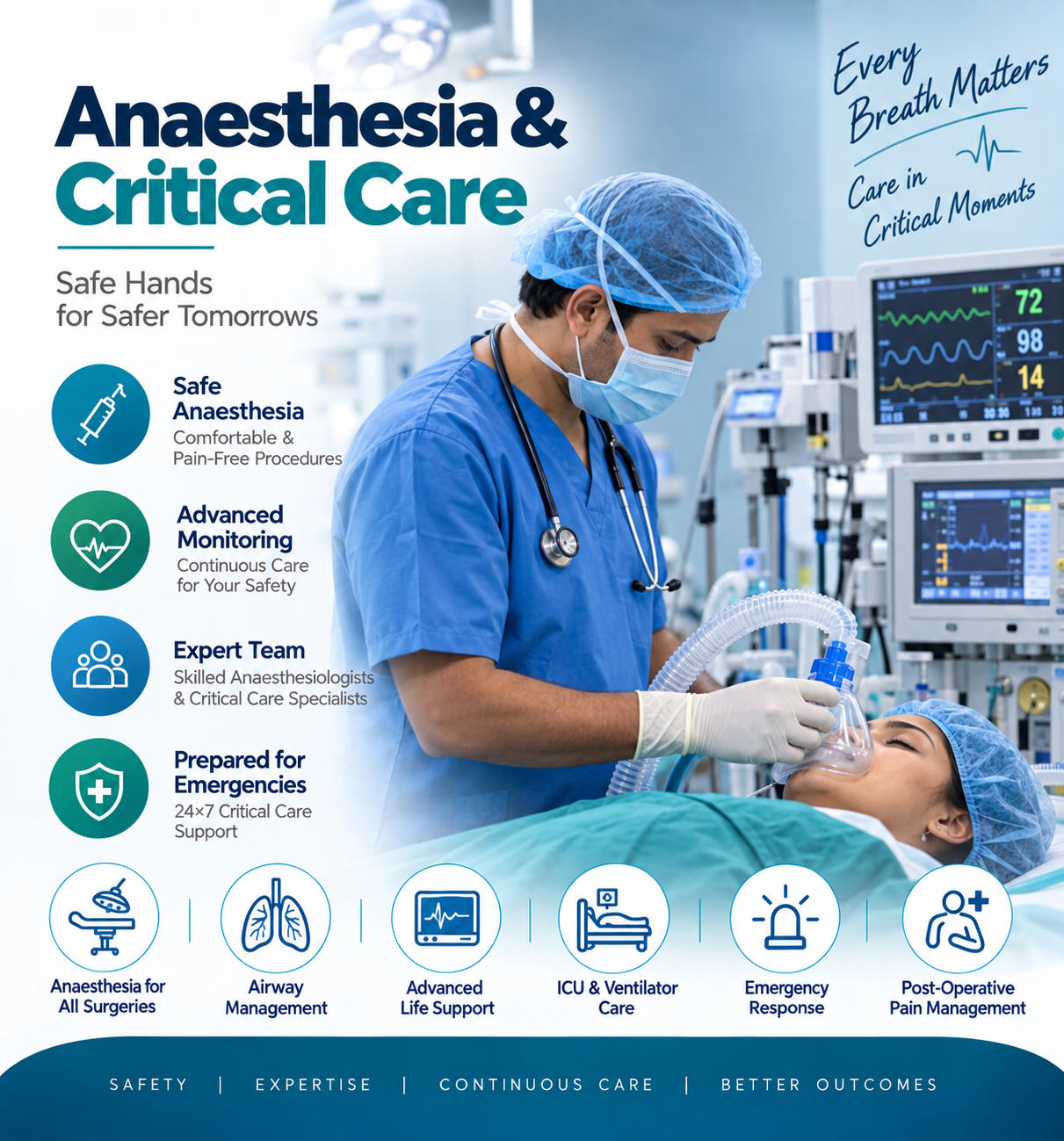
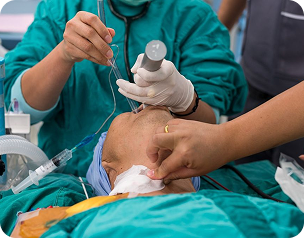
Doctor consulting a patient in AvaMED hospital

What This Department Does

Surgical Anaesthesia

Pre-operative assessment and risk evaluation · General anaesthesia for major surgeries · Regional anaesthesia (spinal, epidural) for orthopaedic and obstetric procedures · Local anaesthesia for minor procedures · Paediatric anaesthesia · Obstetric anaesthesia for C-sections · Airway management and intubation

ICU & Critical Care

24/7 monitoring and management of critically ill patients · Post-surgical ICU care · Ventilator management · Cardiac monitoring · Sepsis management · Multi-organ support · Fluid and electrolyte management · Coordination with all departments for complex cases

Pain Management

Post-operative pain control · Epidural analgesia · Pain management for trauma patients · Chronic pain assessment

Emergency Resuscitation

Advanced cardiac life support (ACLS) · Emergency airway management · Trauma stabilisation · Resuscitation support across all departments

What This Means for You

Before surgery: an anaesthetist reviews your medical history, assesses your fitness for anaesthesia, explains what will happen, and plans the safest approach for your specific procedure and health profile. If you have diabetes, hypertension, a heart condition, or any other risk factor — this is where those are factored in.
During surgery: your vital signs — heart rate, blood pressure, oxygen levels, breathing — are monitored every second by someone whose only job in that room is keeping you safe while the surgeon operates.
After surgery: pain is managed proactively so recovery isn't unnecessarily miserable. If you need ICU monitoring, the same team that managed your anaesthesia manages your critical care — continuity at the most critical moment.
In the ICU: AvaMED's ICU is staffed round the clock with trained critical care nursing, cardiac monitors, ventilator support, and direct access to every specialist in the hospital. For patients who need intensive monitoring — whether post-surgical, post-cardiac event, or acutely ill — this is where the most careful, most constant care happens.
Section Portrait